
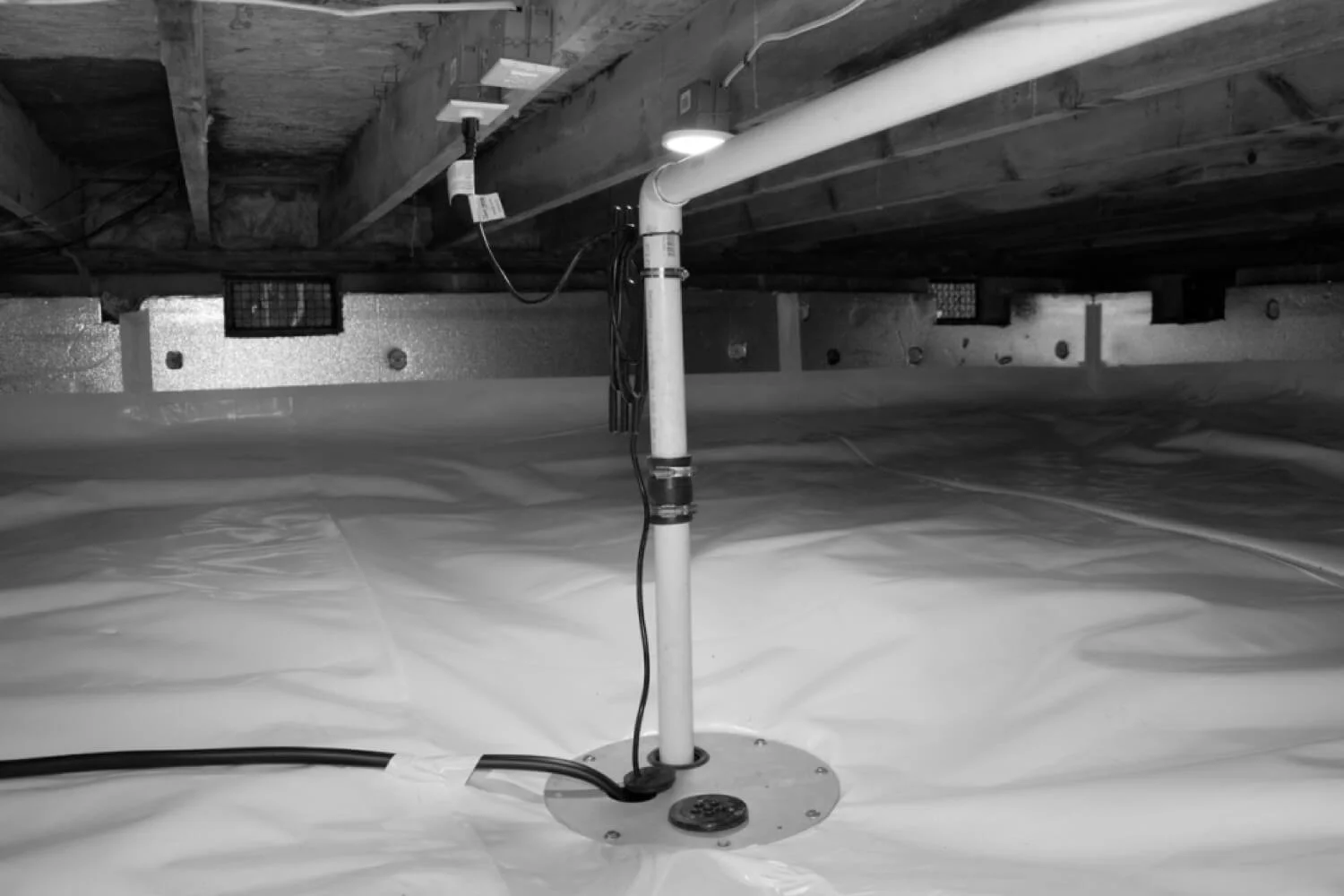
A sump pump keeps groundwater out of your basement. Water from the foundation drains (weeping tile) collects in a pit called the sump, and the pump lifts it out and away from the house. It handles clean groundwater only: a sewage ejector or lift station handles waste from toilets and drains, which is a different system.
There are two common types. A pedestal pump has its motor above the pit; a submersible pump sits in the water. A float turns the pump on as the water rises. A good installation has:
A check valve on the discharge pipe, so pumped water does not drain back into the pit.
A secured lid on the pit, to keep children, pets and debris out.
Its own receptacle, with GFCI protection where your electrical code requires it.
A discharge that ends well away from the foundation, and not into the sanitary sewer where your municipality prohibits it.
Test it a few times a year and before the wet season: pour a bucket of water into the pit and make sure the pump starts, empties the pit and shuts off. A pump that runs constantly, cycles on and off quickly, or makes grinding noises needs attention.
Most sump pumps last roughly 7 to 10 years, depending on how hard they work. Because a failure usually happens during a storm, when power cuts are common, consider a battery or water-powered backup pump, and ask your insurer about sewer backup and overland water coverage.