
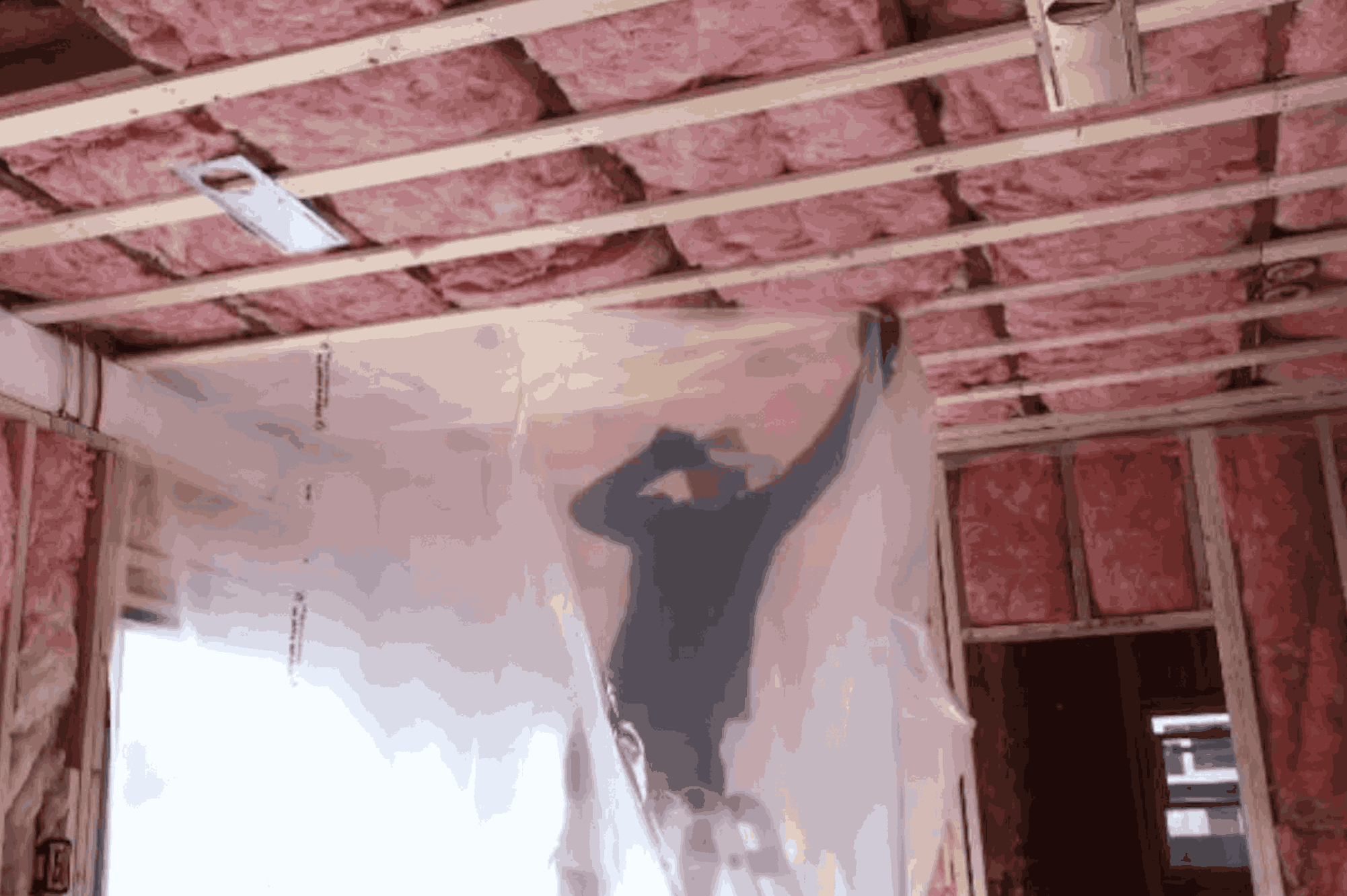
A vapour barrier is a material typically made of plastic or foil sheeting installed within the building envelope, primarily in walls, ceilings, or floors. Its main function is to control the movement of moisture vapour, preventing it from passing through building materials and causing potential damage. The importance of a vapour barrier lies in its ability to manage moisture.
It serves as a protective layer, reducing the passage of moisture from warm, humid areas to cooler, drier spaces within a home. In colder climates, the barrier helps prevent moisture from condensing inside wall cavities or attics, which could lead to mold growth, rot, or structural damage. In hot, humid climates an interior plastic vapour barrier can trap moisture in the wall, so codes do not call for one there. What is right depends on your climate zone.
Proper installation and placement of a vapour barrier are crucial for its effectiveness. In cold climates it goes on the warm-in-winter side of the insulation, between the living space and the insulation. However, improper installation or damage to the vapor barrier can compromise its functionality.
As a new homeowner, understanding the presence and importance of a vapor barrier in your home can help you ensure its integrity through regular inspections. Checking for any signs of damage, such as tears or gaps, and promptly addressing them can contribute significantly to maintaining a healthy and moisture-controlled indoor environment, ultimately preserving the structure of your home.